The client asks for a proposal. First, you need to reframe the engagement.
Cogni6 turns an ambiguous request into an executive problem, scope, assumptions, stakeholders, deliverable and success criteria.
The client makes one request. The engagement contains three.
Behind the requested deliverable are trade-offs, evidence to consolidate and a decision the consultant must be able to defend.
The solution is named before the problem
The client asks for a roadmap, transformation or AI strategy before the expected decisions are explicit.
The scope fits in one sentence
Exclusions, dependencies, roles and completion criteria remain tacit, setting up scope creep and rework.
The deliverable serves the wrong decision-maker
One report must inform the sponsor, reassure operations and let the executive team make a decision.
The same engagement, with an explicit chain of reasoning.
When the work stays fragmented
When Cogni6 structures the engagement
The important engagement returns. So does the thread you must resume every day.
Cogni6 becomes useful well before delivery. It connects the recurring moments when context changes, work resumes and your judgment is required.
Before the client exchange
Find what matters now
Resume the decisions, open questions and next expected outcome without rereading all the engagement material.
After an interview or workshop
Bring in the new context
Add notes, documents and facts to the right file so the next analysis starts from what was just learned.
During production
Move forward without rebuilding the method
Apply the same criteria, controls and roles to recurring work while keeping consequential decisions in your hands.
Before delivery
See what still requires your judgment
Find the evidence, contradictions, assumptions and pending approvals before you stand behind the result in front of the client.
From the client file to a defensible deliverable.
Engagement inputs
Discovery notes, initial request, stakeholders, business context, constraints, timeline and expected formats.
Work with Cogni6
Reframe the problem, make decisions explicit, build assumptions, define scope and set review gates.
Expected deliverables
Engagement brief, question tree, work plan, stakeholder map, success criteria and engagement governance.
What you must be able to verify on this engagement.
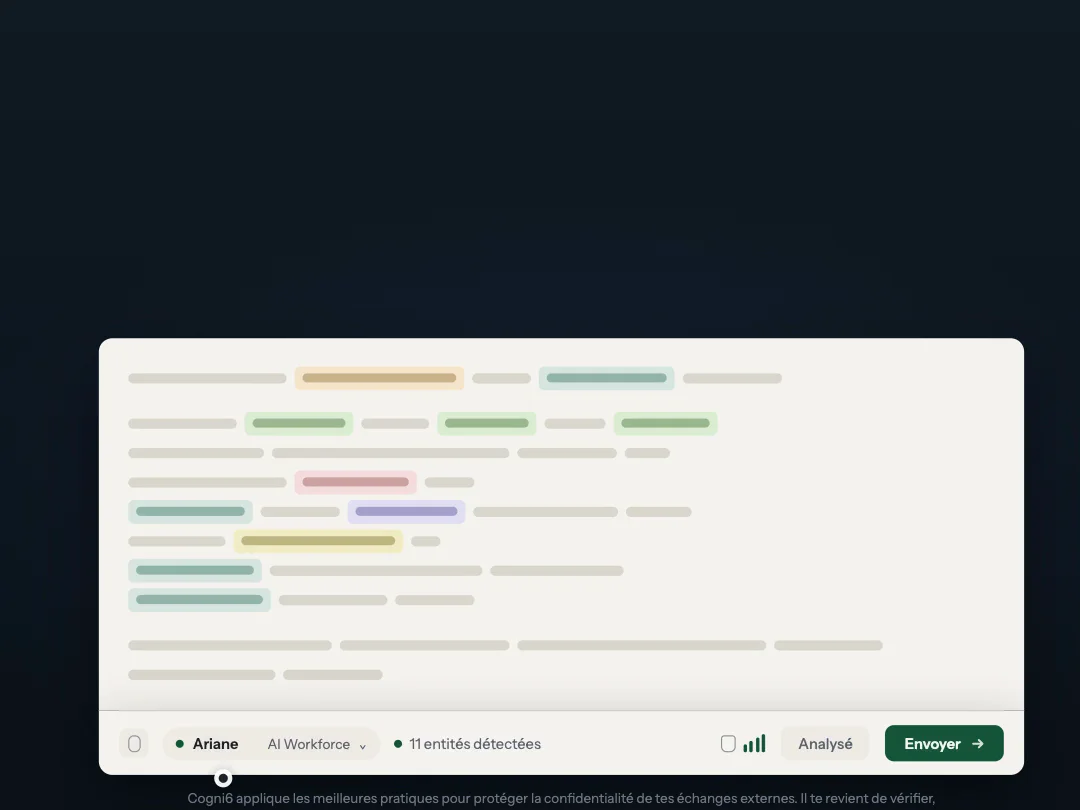
The product view shows the protection applied before sending. The use-case criteria then state what the consultant must be able to review before standing behind the deliverable.
This workflow is part of the current version shown during the guided demo.
Problem reframed
The initial request becomes a management problem precise enough to execute.
Reviewable scope
What is in, what is outside the engagement and which assumptions must be tested are named before work begins.
Observable success
The deliverable, acceptance criteria and checkpoints mean the same thing to everyone involved.
See Cogni6 on an engagement that looks like yours.
Bring an imperfect client request. We will show how Cogni6 turns it into an executable and measurable engagement.
Request a demoThe demo starts with a 20-to-30-minute conversation and can continue on a real case using synthetic or authorized material.