The process looks inefficient. The real cause is elsewhere.
Cogni6 connects operating data, processes, roles and interviews to distinguish symptoms, root causes, constraints and improvement opportunities.
The client makes one request. The engagement contains three.
Behind the requested deliverable are trade-offs, evidence to consolidate and a decision the consultant must be able to defend.
Metrics describe, but do not explain
Delays, rework and costs are visible. The interactions between decisions, capacity, process and behaviour are much less so.
Every function owns a root cause
Operations, sales and management tell three plausible causal stories that lead to different priorities.
Recommendations arrive too early
A recognized practice is proposed before testing whether the local constraint comes from process, governance or capacity.
The same engagement, with an explicit chain of reasoning.
When the work stays fragmented
When Cogni6 structures the engagement
The important engagement returns. So does the thread you must resume every day.
Cogni6 becomes useful well before delivery. It connects the recurring moments when context changes, work resumes and your judgment is required.
Before the client exchange
Find what matters now
Resume the decisions, open questions and next expected outcome without rereading all the engagement material.
After an interview or workshop
Bring in the new context
Add notes, documents and facts to the right file so the next analysis starts from what was just learned.
During production
Move forward without rebuilding the method
Apply the same criteria, controls and roles to recurring work while keeping consequential decisions in your hands.
Before delivery
See what still requires your judgment
Find the evidence, contradictions, assumptions and pending approvals before you stand behind the result in front of the client.
From the client file to a defensible deliverable.
Engagement inputs
Process maps, metrics, capacity data, roles, governance rules, incidents and frontline interviews.
Work with Cogni6
Structure assumptions, reconcile data and perceptions, test causes and surface constraints, gaps and levers.
Expected deliverables
Operational diagnostic, root causes, constraint map, priorities, recommendations and sequenced action plan.
What you must be able to verify on this engagement.
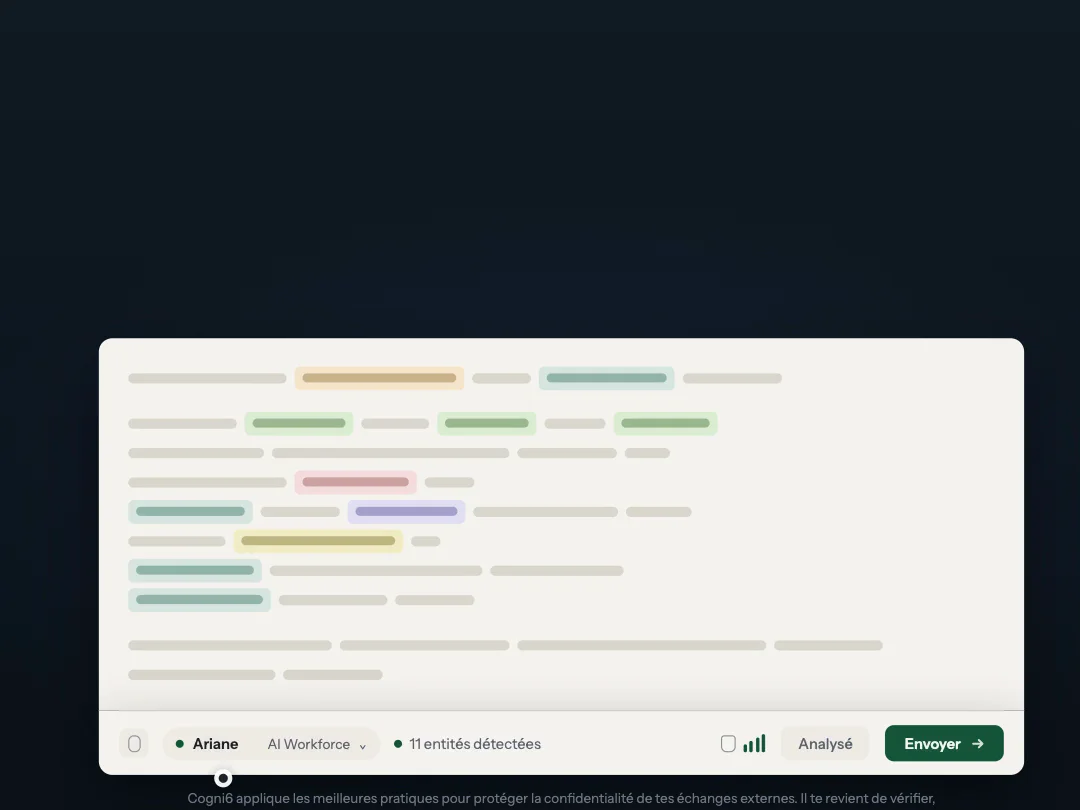
The product view shows the protection applied before sending. The use-case criteria then state what the consultant must be able to review before standing behind the deliverable.
This workflow is part of the current version shown during the guided demo.
Symptoms and causes separated
Every proposed cause is tested against data, processes and field observations.
Constraints prioritized
The bottlenecks that truly limit the system are separated from secondary irritants.
Plan linked to diagnostic
Every proposed action addresses a documented cause and carries an outcome to observe.
See Cogni6 on an engagement that looks like yours.
Bring a process, a few metrics and the diagnostic format your client expects. We will start from your method.
Request a demoThe demo starts with a 20-to-30-minute conversation and can continue on a real case using synthetic or authorized material.